
A water heater flush in Austin is one of those small maintenance jobs that pays for itself quietly — and it's the one most homeowners skip right up until their shower turns lukewarm the week the in-laws arrive.
Here's the thing about Central Texas water: it's hard. Not "kinda hard" — build-a-crust-on-your-faucet, sediment-in-the-bottom-of-your-tank hard. Over a year, that mineral sediment settles into a layer at the bottom of your water heater. The heater works harder to push heat through it, your bill creeps up, and the tank starts giving you warning signs. A flush clears it out. Most tanks only need it once a year, and fall — before holiday guests strain the system — is the smart time to do it.
This is the stuff we see on the truck every September. Last week alone, one Austin homeowner lost hot water entirely when the emergency pressure valve on her upstairs heater gave out, and another's annual flush turned up a shorted bottom element that had been overheating the tank off and on for weeks. Neither household expected trouble. Both were glad it was found before the holidays.
So: five signs your water heater is asking for attention.
1. It's popping, rumbling, or cracking
The most classic sign of sediment buildup. Those popping and rumbling sounds are tiny explosions of steam punching through the sediment layer on the tank bottom — water trapped under the mineral crust boiling and escaping. It sounds like a popcorn maker with a guilty conscience.
If your heater is noisy and you can't remember the last time it was flushed, sediment is the prime suspect. A flush often quiets it right down. If the noise stays after a flush, the sediment may have hardened into a cement-like layer — that's when a plumber needs to evaluate the tank.
2. The hot water doesn't last like it used to
Sediment takes up space. A 50-gallon tank with several inches of mineral sludge at the bottom isn't really a 50-gallon tank anymore — it's a 40-something-gallon tank working overtime. The result: hot water runs out faster, especially back-to-back showers, and it takes longer to recover between uses.
With the holidays coming, this is the symptom that turns from an annoyance into a crisis. A house that limps along for two people can fall apart for eight. One customer told us exactly that last month: the heater went out on a Friday evening, and by Saturday we had them sorted — they ended up upgrading to a larger heater because the old one had been undersized for their household all along.
3. The water looks rusty or smells off
Run the hot water and check the color. Clear cold water but rusty hot water points to corrosion inside the tank. An occasional sulfur or "rotten egg" smell on the hot side usually means bacteria reacting with the anode rod — common in well-water areas outside Austin and Marble Falls.
Rusty water is the sign to take seriously soonest: it can mean the tank's glass lining has failed and the steel underneath is corroding. A flush plus an anode-rod check tells you whether you're looking at maintenance or a replacement timeline. Either way, you want to know before December.
4. There's moisture or pooling around the base
Walk out to the heater and look at the floor around it. Dampness, pooling, or corrosion at the fittings is never "just condensation." In our part of Texas, garages and utility closets get hot enough that small leaks evaporate fast — by the time you see standing water, it's often been leaking a while.
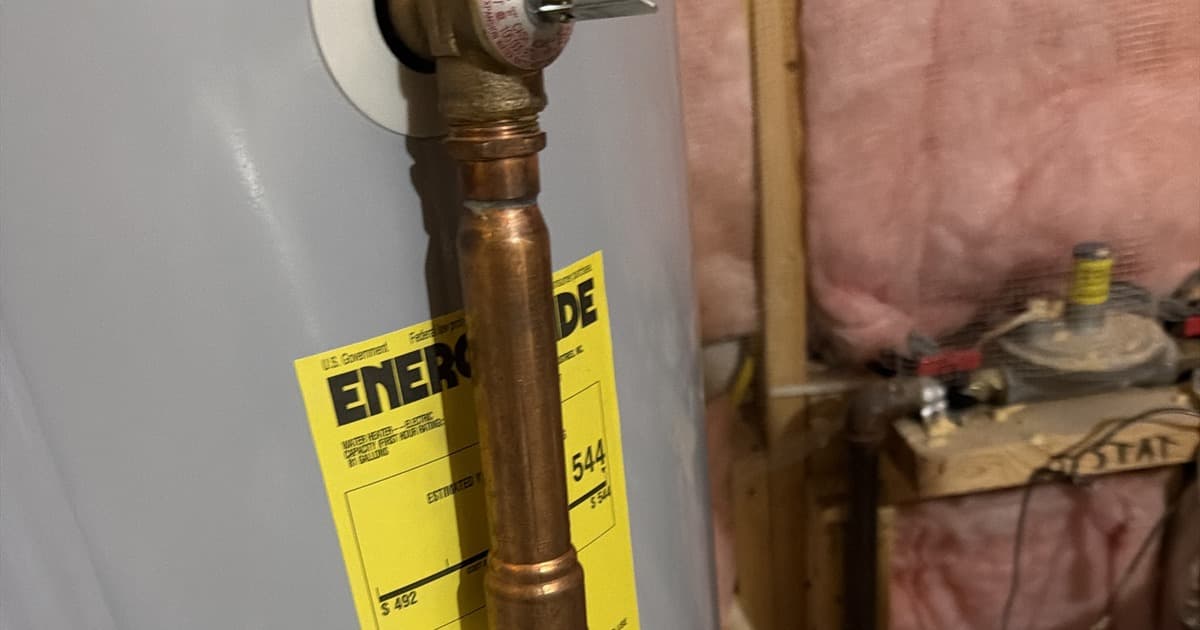
That emergency pressure valve we replaced last week? That's the small brass valve on the side of the tank with a little lever — the temperature-and-pressure relief valve. It's a safety device, and when it fails, the tank has no way to vent. If yours is weeping, corroded, or over ten years old, have it checked along with the flush. This one is genuinely a safety item, not a nice-to-have.
5. You can't remember the last time (or ever)
If you bought the house and never thought about the water heater, you're in good company — and your heater probably is too. Tanks in hard-water areas that go years without a flush build up the kind of sediment that shortens their life and spikes energy use. The bottom element sits right in that sludge, overheats, and fails early. We found exactly that during a routine flush visit: the bottom element had shorted out, the overheating had stressed the thermostats, and none of it was visible from the outside. The only clue was inconsistent hot water.
Most tank heaters run 8–12 years. If yours is past eight and unflushed, a flush plus a quick element and anode check is the cheapest insurance you can buy for it.
What a flush actually does
In short: the tank is drained through a hose, the sediment layer is rinsed out, the pressure-relief valve is tested, and the elements and thermostat are checked on electric units. It takes about an hour for a typical residential tank. The immediate payoff is quieter operation, faster hot-water recovery, and lower energy use. The long-term payoff is a tank that lives its full lifespan instead of dying young from sediment stress.
A word of caution: if the heater is very old and has never been flushed, don't just open the drain valve yourself and hope for the best. Draining an ancient tank can stir up problems — stuck drain valves, disturbed sediment clogging the line — and the pressure-relief valve should be tested by someone who knows what a failing one looks like. This is the one tip where "call a plumber" is the honest advice.
Bonus tip while you're out there: know your shutoff
Fall is also the season to find your main water shutoff — before you need it at 2 AM. Around Austin and Marble Falls, it's usually buried near the curb or street, right after the meter box on the house side (not inside the meter box itself, and not on the wall). Go look for it on a Saturday morning, not during a leak. You'll thank yourself later.
The short version
Your water heater is about to work harder than it has all year — extra showers, extra dishes, extra laundry from extra people. A once-a-year flush is the single best thing you can do for it, and September and October are the months to do it. Listen for the rumble, watch the recovery time, check around the base, and if any of the five signs above sound familiar, get it on the calendar before the guests arrive.
Call for your free estimate visit — Austin (512) 233-6590, Marble Falls (830) 460-3565. Weekdays 7:30 AM–5:30 PM, weekends by appointment. TX Master Plumber License #M-41147.